Call us
Face Milling
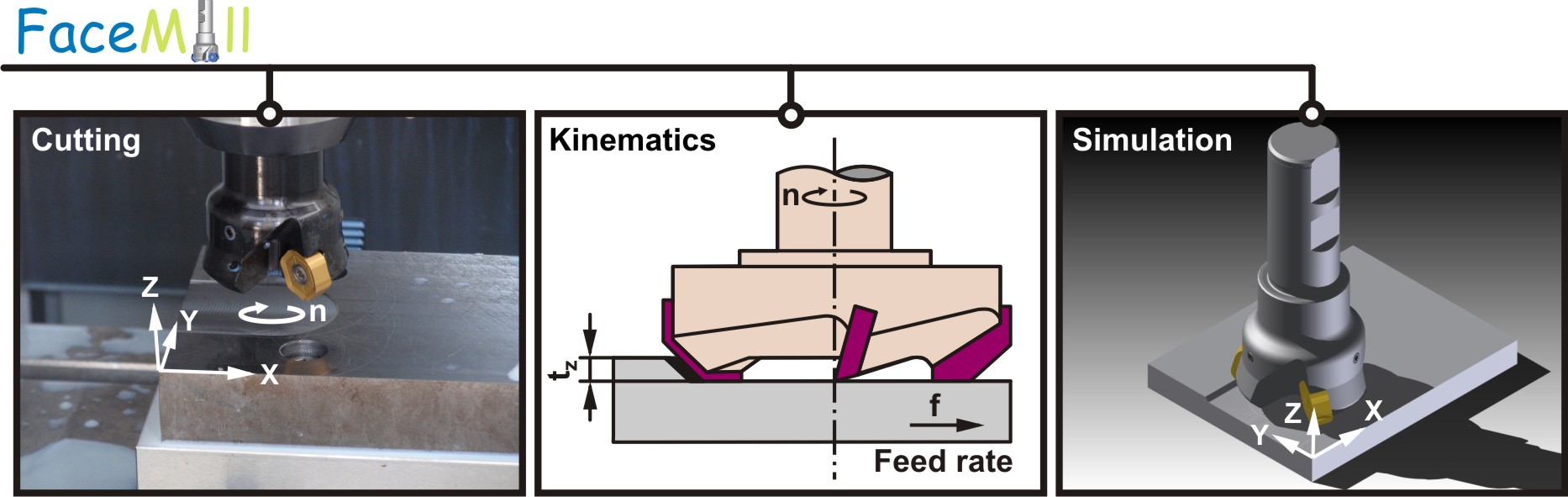
This research activity focuses on the development of advanced simulation methodologies for face milling processes using integrated CAD/CAM and finite element modelling approaches. A comprehensive three-dimensional simulation framework was developed within a commercial CAD environment to accurately reproduce cutting tool kinematics, chip formation mechanisms, surface generation phenomena, and the influence of tool geometry on the final workpiece quality. The developed methodology enables the prediction of key manufacturing outputs, including surface topography, surface roughness, non-deformed chip geometry, cutting force evolution, and process dynamics. Emphasis was placed on the geometric modelling of the cutting-edge trajectory and its interaction with the workpiece through solid modelling and Boolean operations, allowing detailed analysis of material removal mechanisms.
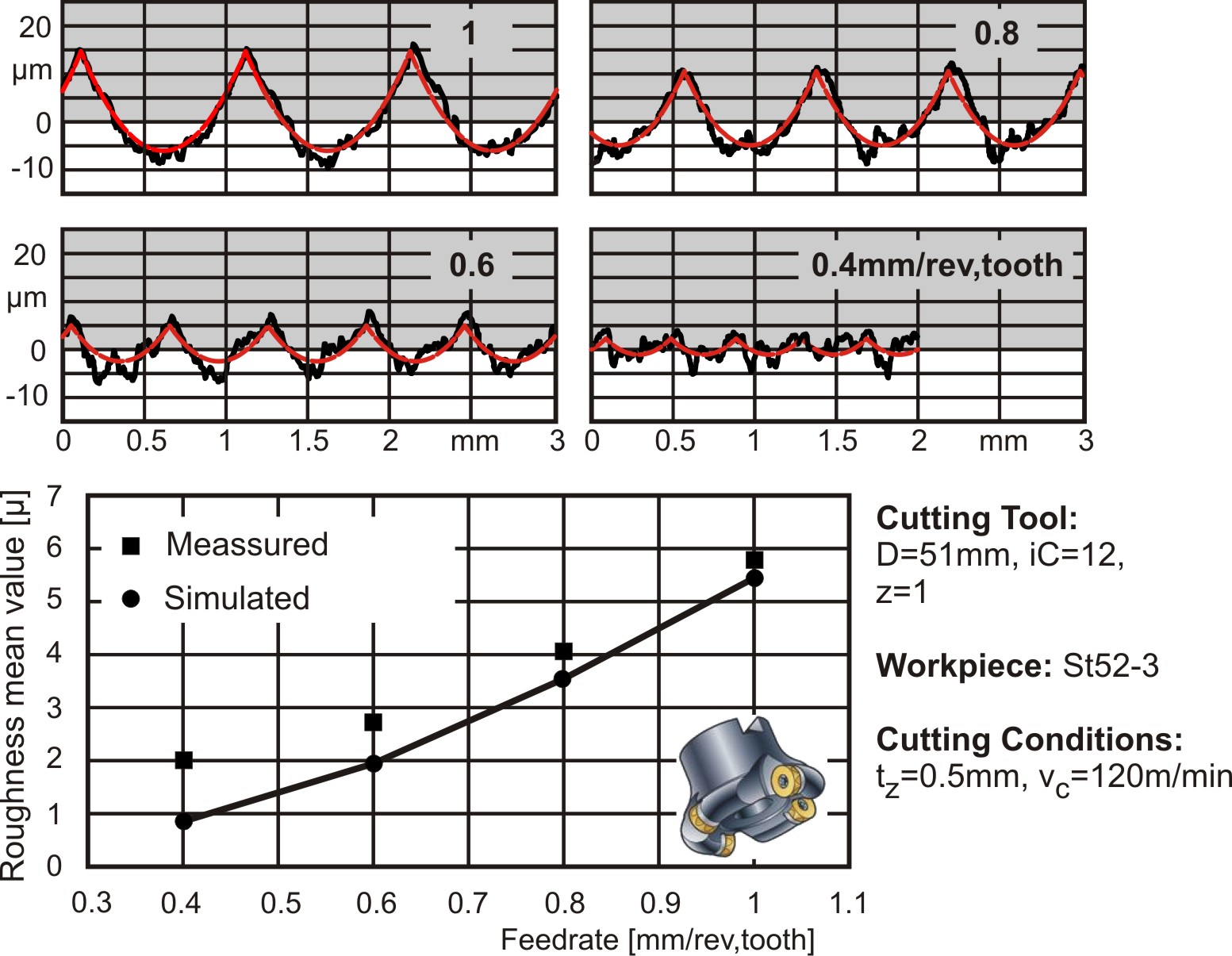
The simulation software was systematically verified through an extensive series of machining experiments. Experimental measurements of surface morphology and roughness were compared with simulation predictions, demonstrating a high degree of agreement and confirming the reliability of the proposed approach. The validated methodology provides a powerful tool for process planning, optimization of cutting conditions, and improvement of machining performance.