Call us
Laser Engraving
This research activity focuses on the development of advanced numerical models for the analysis, simulation, and optimization of nanosecond pulsed laser engraving processes. The primary objective is to establish predictive tools capable of accurately describing the interaction between laser radiation and materials, enabling the estimation of the final engraved geometry and the dimensional deviations that occur during material removal.

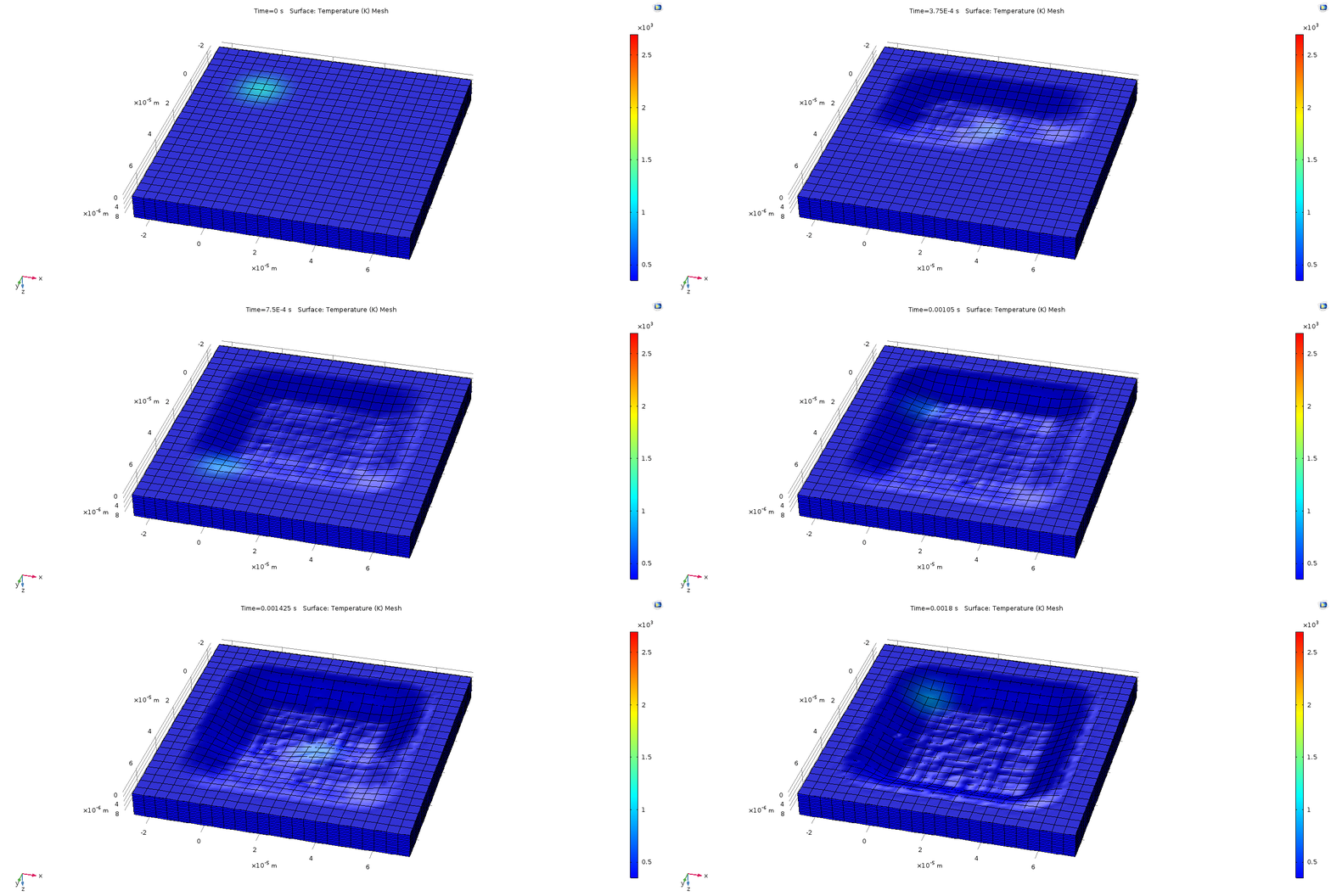
A significant part of the research is dedicated to the development of experimentally validated Finite Element Method (FEM) models that simulate the complete laser engraving process. The modeling approach incorporates the generation of the laser pulse map, heat transfer mechanisms, material melting and vaporization phenomena, plasma-plume formation, laser beam shielding effects, and material ablation. Special emphasis is placed on the transient thermal behavior of the workpiece and the evolution of the engraved geometry during successive laser pulses.
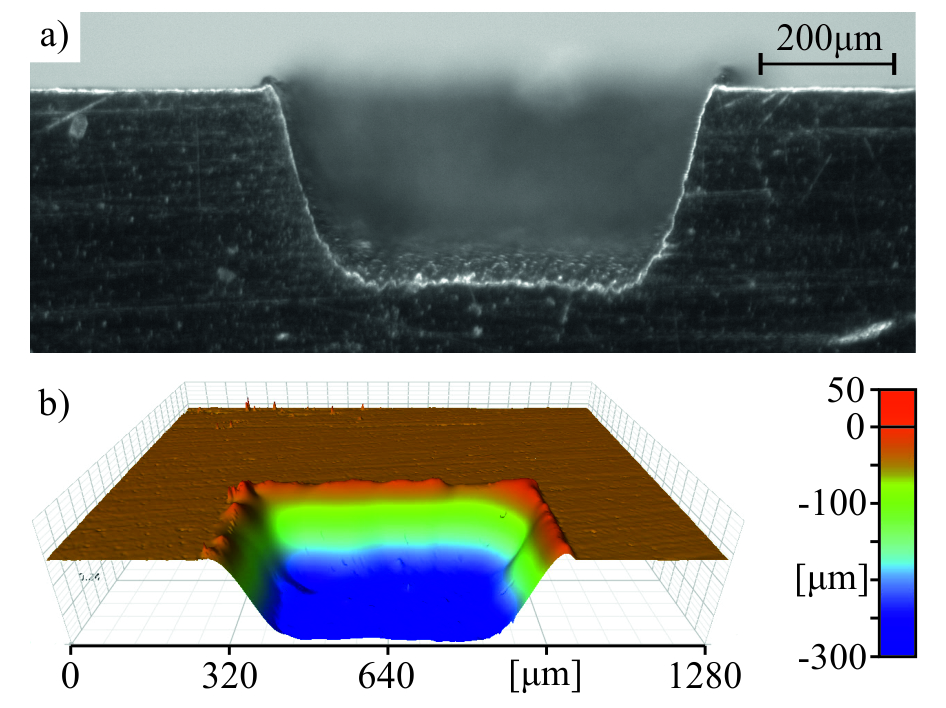
The developed simulation model enables the prediction of critical geometrical characteristics of engraved features, including engraving depth, top kerf width, bottom kerf width, and kerf taper angle. Unlike conventional approaches that estimate only the nominal dimensions of the machined geometry, the proposed methodology predicts the actual geometry obtained after machining by accounting for process-induced defects such as sloped sidewalls and kerf formation. This capability provides valuable insight into the dimensional accuracy of laser-machined components and allows the optimization of process parameters before experimental implementation.
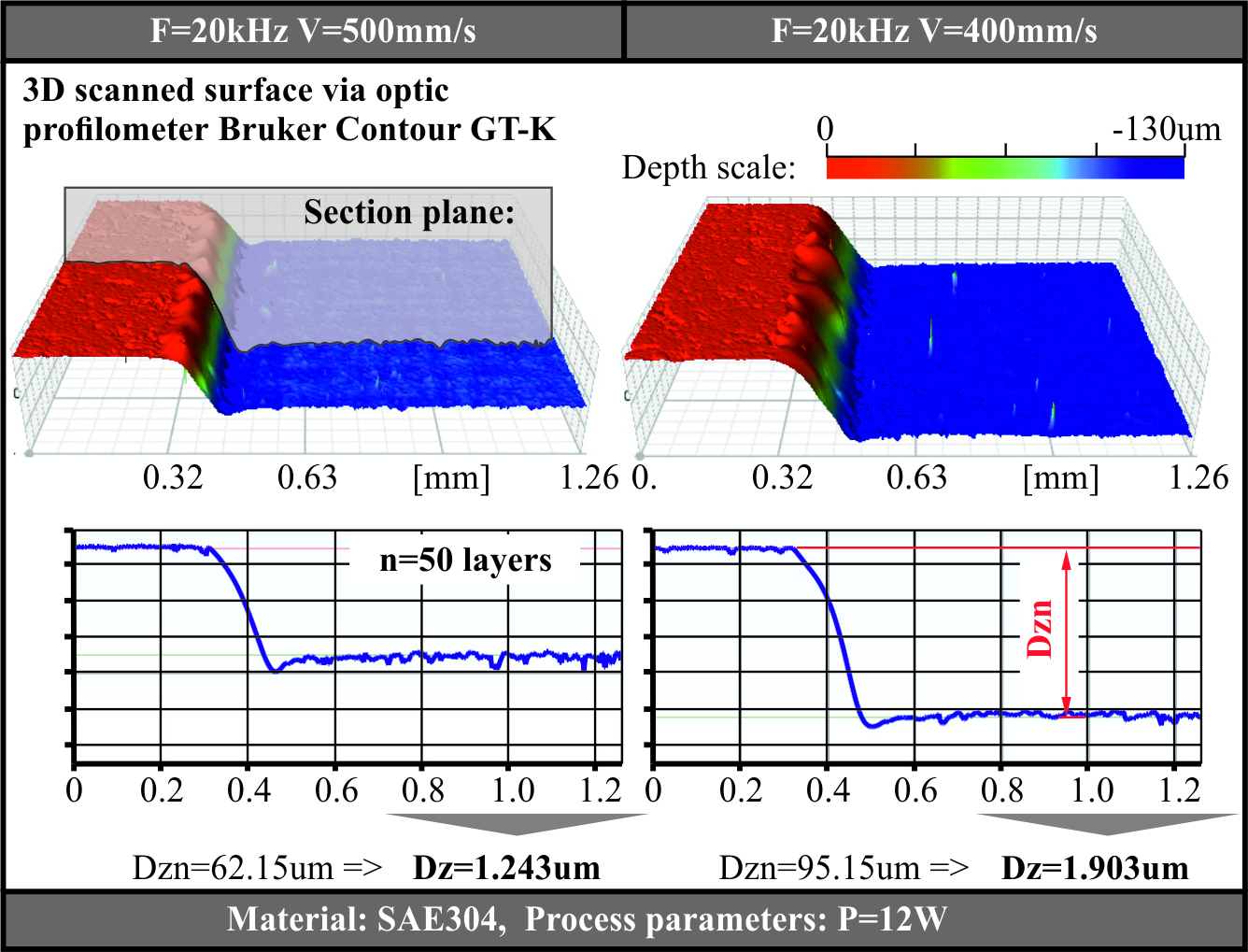
Research efforts also focus on the detailed representation of laser-material interaction mechanisms. The laser beam is modeled as a Gaussian heat source, while the influence of material reflectivity, phase transformations, plasma absorption, and plasma-emitted radiation are incorporated into the thermal model. Furthermore, moving mesh techniques are employed to simulate material removal during ablation and to continuously update the geometry throughout the machining process.
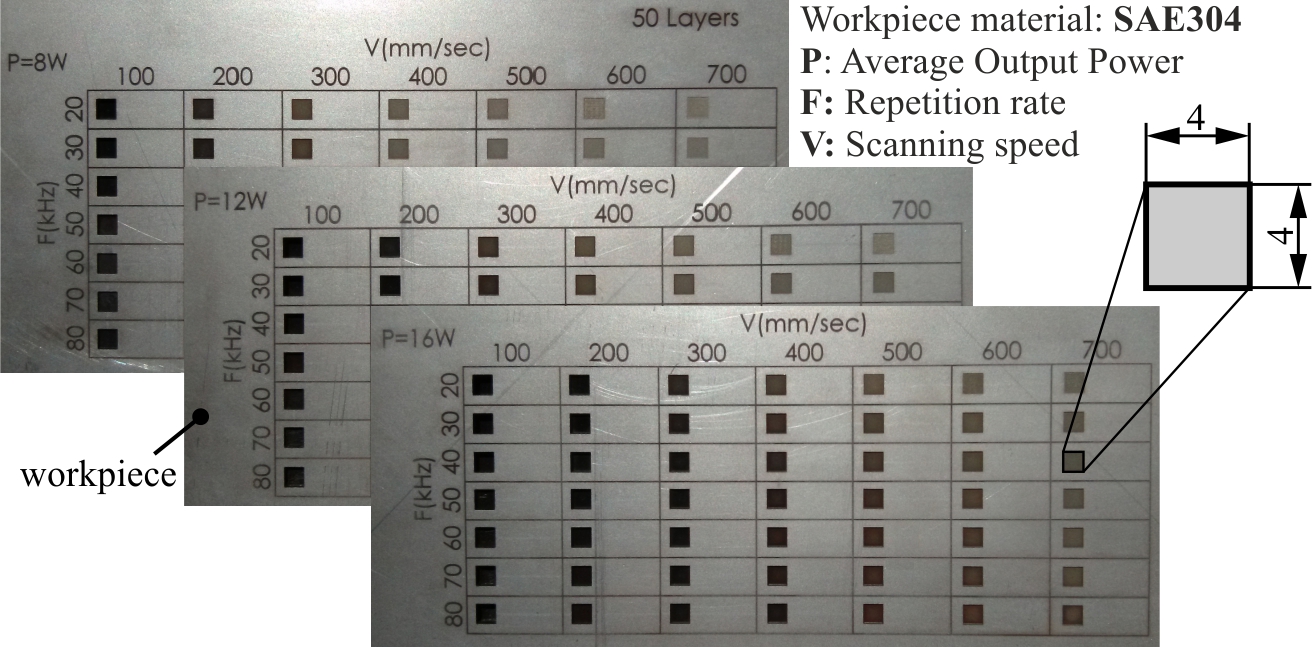
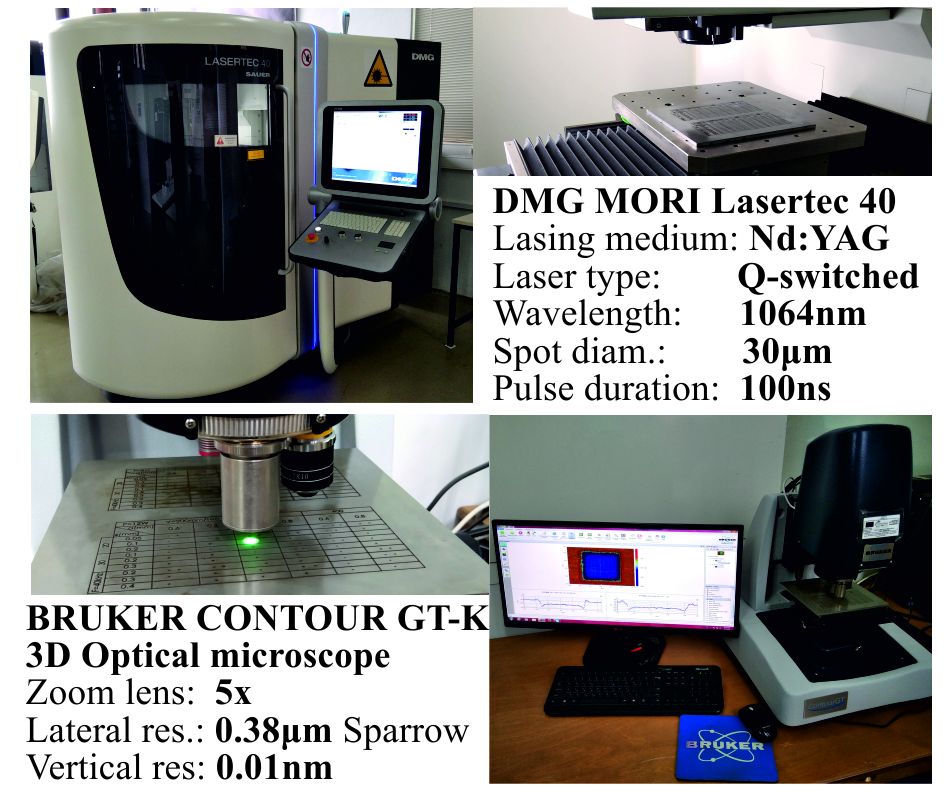
The developed models are experimentally validated through laser engraving tests performed under different combinations of process parameters, including laser power, pulse repetition rate, scanning speed, pulse duration, and engraving depth. The comparison between simulation predictions and experimental measurements demonstrates the capability of the models to accurately reproduce the geometrical characteristics of engraved features and to quantify machining defects.