Call us
WaterJet
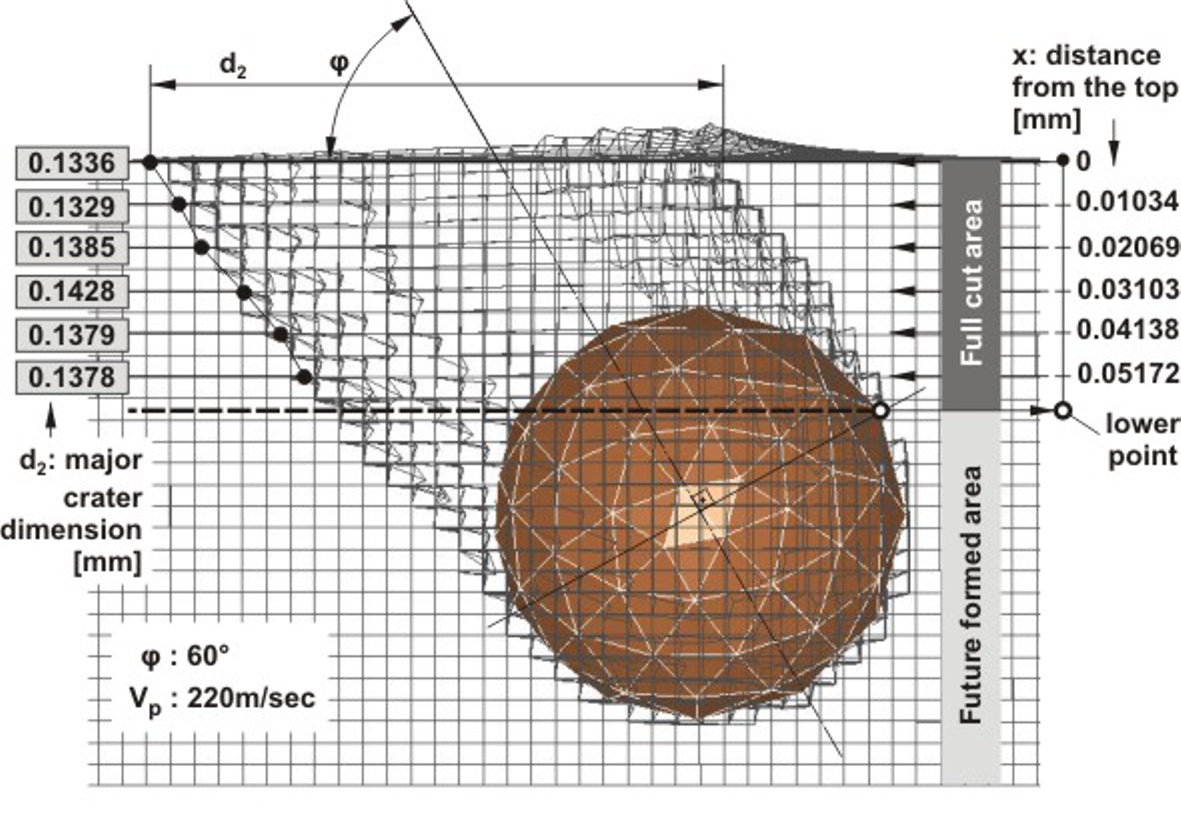
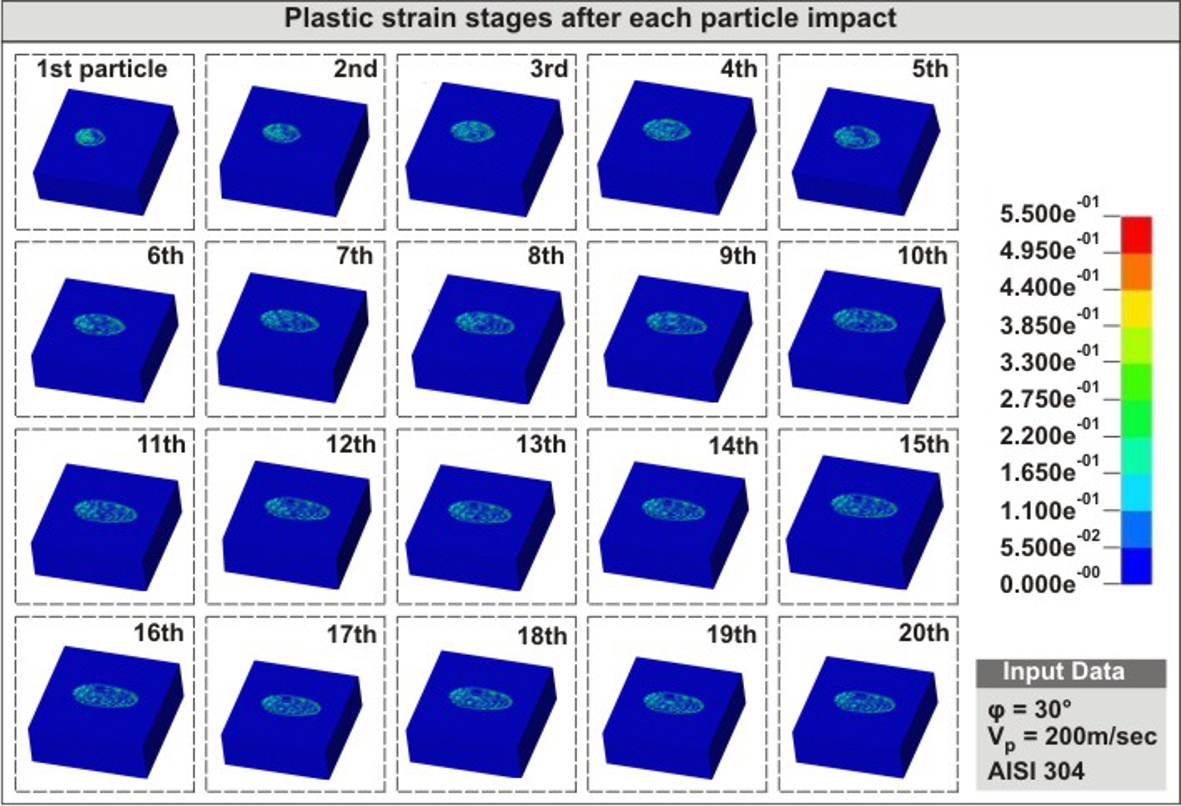
This research work focuses on the numerical simulation of the Abrasive Water Jet (AWJ) machining process using advanced Finite Element Analysis (FEA) techniques. The study aims to investigate the erosion mechanisms induced by high-velocity abrasive particles impacting metallic surfaces and to improve the understanding of material removal phenomena occurring during AWJ machining. A three-dimensional finite element model is being developed to simulate the interaction between multiple abrasive particles and the workpiece material under various impact conditions. Particular emphasis is placed on the influence of particle impact angle and velocity on crater formation, deformation behavior, stress distribution, and the resulting crater geometry. The evolution of crater shape and circularity is evaluated throughout successive particle impacts, providing valuable insight into the transition from transient to stabilized erosion conditions. The developed numerical software enables the prediction of erosion characteristics while significantly reducing the need for costly and time-consuming experimental investigations. Furthermore, the simulation results are used to enhance the understanding of abrasive water jet machining mechanisms and support the optimization of process parameters for improved machining performance, dimensional accuracy, and surface integrity.